The Holidays in Malta local guide · Updated October 2026

Malta Travel Guide: plan a richer island escape.

Discover what to do in Malta, where to stay near Valletta, how to get around and how to shape three memorable days—from harbour mornings to golden-hour city walks.

Explore the 3-day itinerary

A little island with layers

Why visit Malta?

Malta brings together a walkable historic capital, centuries of architecture, lively fishing villages, clear swimming spots and the everyday rhythm of Mediterranean harbour life—all across a compact island nation.

It works especially well for a first city break or a longer family holiday: spend the morning in Valletta, take a ferry across the harbour, and finish the day by the water. English is an official language, and the central towns are well connected by public transport. Build in breathing room; Malta’s best moments often happen between the headline sights.

This guide focuses on the central harbour and nearby destinations, with practical notes to help you plan. Attraction hours, transport routes, sea conditions and seasonal services can change, so check official sources before setting out.
Best things to do in Malta

Historic streets, harbour light and island days.

Use the central harbour as your starting point for Malta’s most rewarding experiences.

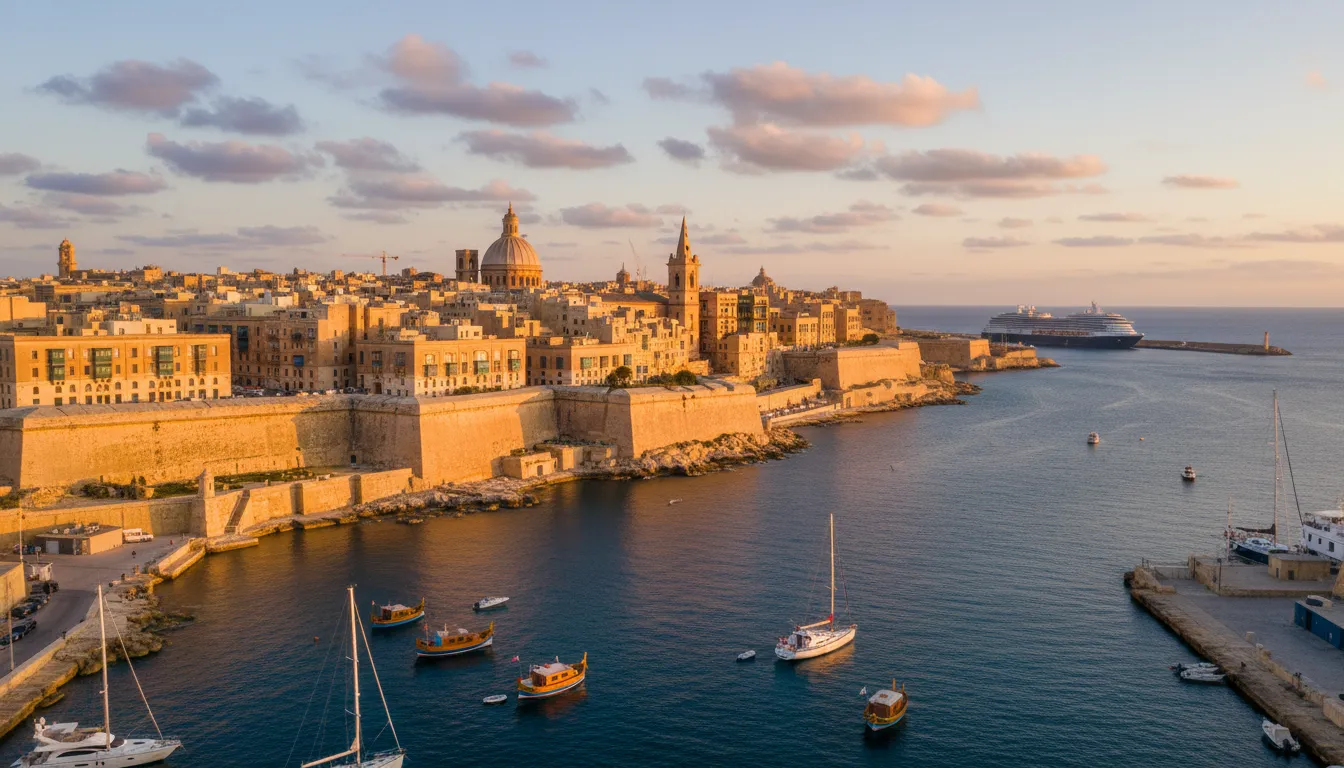
Valletta's historic skyline above the harbour at sunset

01 · Valletta

Walk the golden capital

Follow the grid of honey-coloured streets, look up at carved balconies and pause at Upper Barrakka Gardens for a Grand Harbour view. Visit St John’s Co-Cathedral and the museums at a pace that leaves time for a café stop. Valletta is compact, but its churches, bastions and side streets reward a full day.

Yachts in Msida Marina viewed from the Pietà terrace

02 · The central harbour

Follow the waterfront

Ta’ Xbiex and Pietà invite slower mornings: marina promenades, local cafés and a front-row look at everyday island life. Continue towards Gżira or cross the harbour to Valletta. A walk here is an easy way to see the working side of the island between sightseeing days.

Ta' Xbiex terrace with wide views across central Malta

03 · Sliema & Gżira

Sea views and easy energy

Come for the ferry, waterfront swimming spots, shopping and a broad choice of restaurants. Take the promenade at golden hour, then use the ferry for a scenic link to Valletta when operating. Check the current timetable before you travel.

Historic honey-coloured Maltese architecture beside the sea

04 · Mdina & Rabat

Step into Malta’s older story

Walk the quiet lanes inside Mdina’s fortified walls, then continue to neighbouring Rabat for historic sites and a lived-in town feel. Go early or late for softer light and cooler streets. Allow time for the journey across the island.

Maltese coastline with a view towards the sister islands

05 · Gozo & Comino

Choose one island day

Gozo offers a slower rural change of pace, coastal walks and Victoria’s Citadel. Comino’s Blue Lagoon is famous for clear water and gets busy, especially in peak season. Check official ferry operators, access rules and sea conditions before travelling.

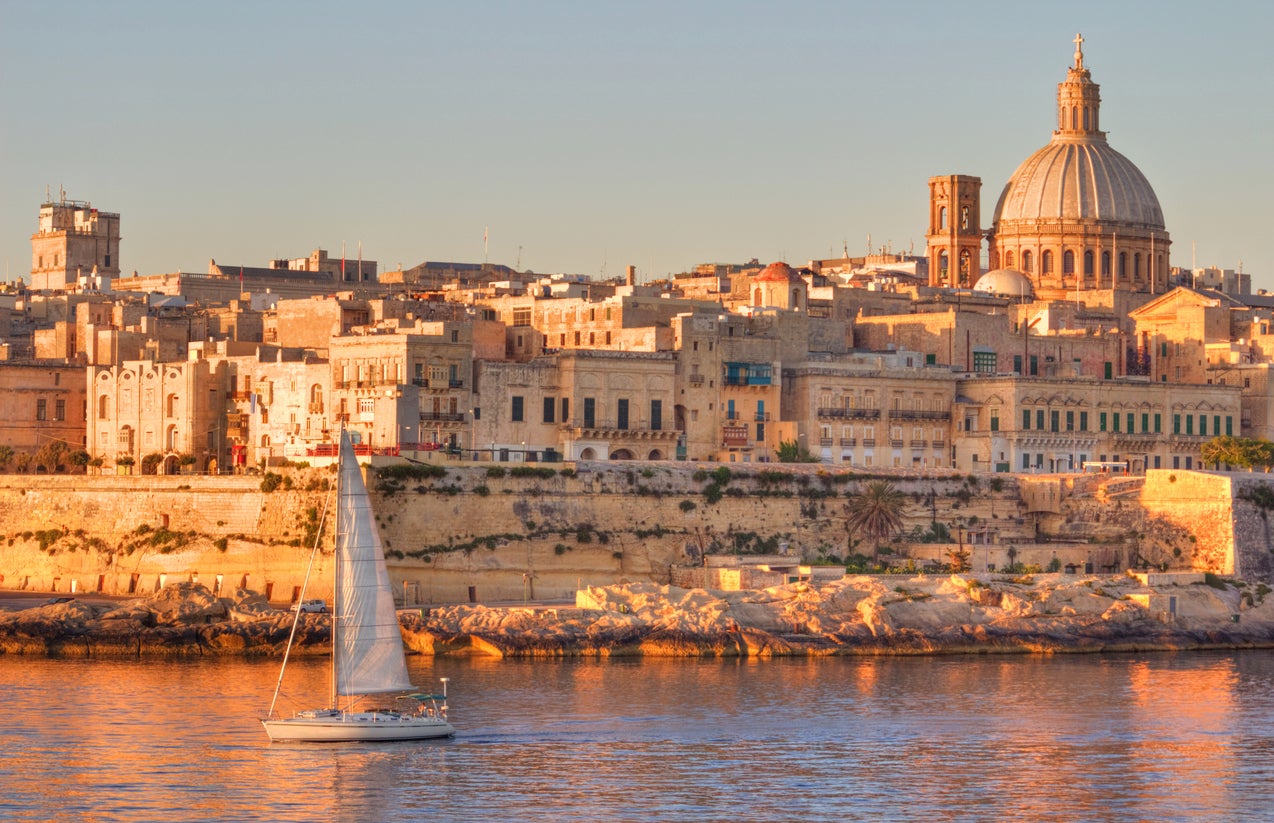
Traditional boat sailing beside Valletta's historic harbour

06 · Three Cities

See the harbour from the other side

Birgu, Senglea and Cospicua face Valletta across Grand Harbour. Explore the waterfront, bastions and narrow streets, then return by ferry when services are running. This is one of the easiest ways to turn a Valletta day into a harbour adventure.

Where to stay in Malta

Make the central harbour your base.

For a first visit, Ta’ Xbiex and Pietà balance access to Valletta with calmer marina-side evenings.

Property details and live availability are confirmed on each booking platform. Choose the home that best fits your group and travel dates.

A relaxed Malta itinerary · 3 days

History, water and time to breathe.

A first-time Malta itinerary that gives each day a clear focus and keeps your evenings open.

Day 1: Valletta and Grand Harbour

Start in Valletta while the streets are fresh. See the main sights that matter to you, pause at Upper Barrakka Gardens and leave room for lunch. In the afternoon, take a harbour ferry if services are operating, or stroll the waterfront. Stay for dinner in the capital or return to your base for a quieter evening.

Day 2: Ta’ Xbiex, Pietà and Sliema

Keep day two close to home. Walk the marina promenades, linger over a café stop and explore Gżira or Sliema. Take a swim where conditions allow, then enjoy a slow terrace afternoon. Head out for sunset and dinner along the seafront.

Day 3: Mdina or the sister islands

Choose one full-day direction. Mdina and Rabat make a rewarding history day; Gozo offers a change of landscape; Comino is best for a water-focused trip when boat access and conditions suit. Check opening hours and transport before leaving, and avoid trying to combine distant highlights in one day.

Staying five to seven days? Add a beach day, a village evening or another island excursion instead of squeezing everything into this short itinerary.

Getting around Malta

Use buses, ferries and your own pace.

A car is optional for a central-harbour stay. Buses reach towns across Malta and Gozo; ferries can make the Valletta–Sliema and Valletta–Three Cities crossings part of the day out.

Practical tip

Check live information on the day.

Routes, timetables, ferry operations and attraction hours can change. Confirm the latest details with official providers before you travel.

Malta travel FAQs

A few helpful answers before you go.

How many days do you need in Malta?

Three days gives you time for Valletta, the central harbour and one day trip. Five to seven days makes space for beaches, Mdina, Gozo or Comino without making every day a race.

Where is the best area to stay in Malta for first-time visitors?

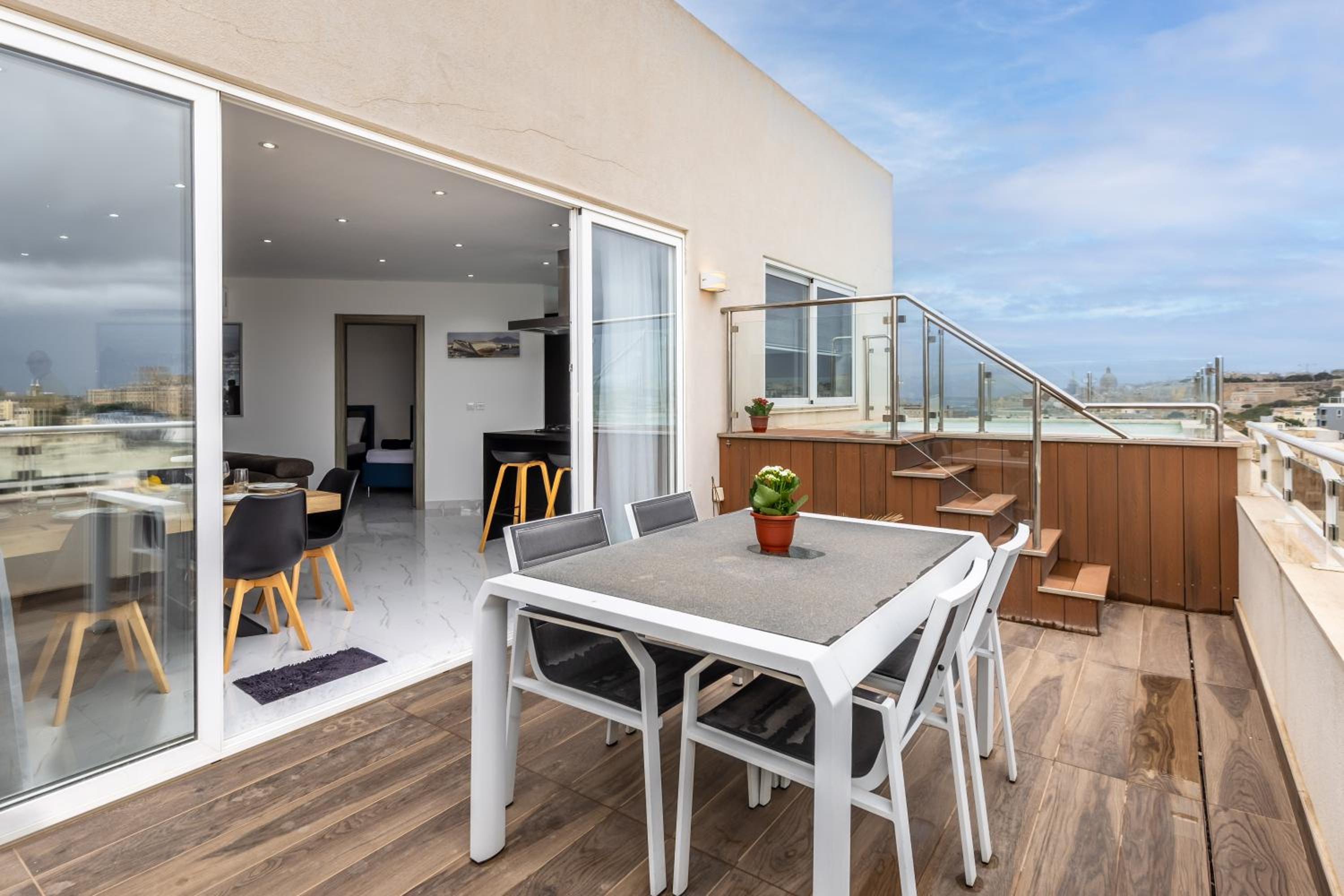
The central harbour around Ta’ Xbiex and Pietà is a convenient base for visitors who want access to Valletta, Sliema and ferry connections while staying in a calmer residential neighbourhood. See our Ta’ Xbiex penthouse and Pietà marina apartment.

Can you explore Malta without renting a car?

Yes. Buses serve towns around Malta and Gozo, while ferry services connect Valletta with Sliema and the Three Cities. Check the official route planner and timetables for your exact dates.

What is the best time of year to visit Malta?

Spring and autumn are popular for comfortable sightseeing. Summer suits beach-focused trips and long evenings; winter is quieter and mild. Check forecasts and seasonal transport before you travel.

Is Malta suitable for a family holiday?

Malta can suit families who combine sightseeing with relaxed time by the water. Choose accommodation with enough space for your group, plan travel around children’s pace and check swimming conditions locally.

What should I pack for a Malta holiday?

Bring comfortable walking shoes, sun protection and a light layer for breezier evenings. Pack swimwear for suitable weather and check the forecast close to departure.

When to come

Malta is more than a summer island.

Spring and autumn bring warm light and gentler sightseeing. Summer is made for sea days and late dinners. Winter is quieter, greener and ideal for culture.

A few useful notes

Small choices make the stay easier.

  • Getting aroundBuses, taxis and ferries connect the central harbour well.
  • DrivingTraffic drives on the left; parking is limited in busy areas.
  • What to packComfortable shoes, sun protection and a light layer for evenings.
  • Eco contributionMalta’s environmental contribution may be collected separately.

Choose your base

Stay close to the places you came to see.

Compare the private-pool penthouse and the marina-view apartment.

See both stays
Plan your stay